Most people spend weeks researching which clinic to choose – but very few prepare for what happens after they leave the operation table. The days following a hair transplant are just as critical as the procedure itself. Your scalp is healing, follicles are settling, and your immune system is working overtime. During this window, knowing the difference between normal recovery and early infection can be the single most important thing you do for your results.
NeoFatbury has put together this week-by-week recovery tracker to give you a clear, day-by-day picture of what your scalp should look like – and the specific moments when something feels off enough to call your surgeon.
Why Tracking Hair Transplant Infection Symptoms by Day Matters
Recovery is not a single event – it is a process with distinct phases. What looks alarming on Day 2 may be completely normal. What seems minor on Day 9 could be the beginning of a bacterial infection if left unaddressed.
Generic symptom lists do not help patients make real-time decisions. A day-by-day tracker does. It gives you a reference point at every stage so you are never guessing whether what you see on your scalp is healing or a warning sign.
The most common reason infections escalate is not negligence – it is uncertainty. Patients are unsure whether to call their surgeon or wait it out. This guide removes that uncertainty entirely.
Days 1 to 3 – The Highest Risk Window After Hair Transplant
The first 72 hours after surgery are the most vulnerable period for your scalp. The donor and recipient areas are open micro-wounds. Your body’s inflammatory response is at its peak, and external bacteria have the easiest opportunity to enter.
What is completely normal during Days 1–3:
Mild redness across the recipient and donor areas
Swelling around the forehead and eyes – this peaks around Day 2 and gradually subsides
Pinpoint scabbing forming around each graft site
Mild tightness or tenderness when touching the scalp
Clear or slightly yellowish fluid weeping from the donor area
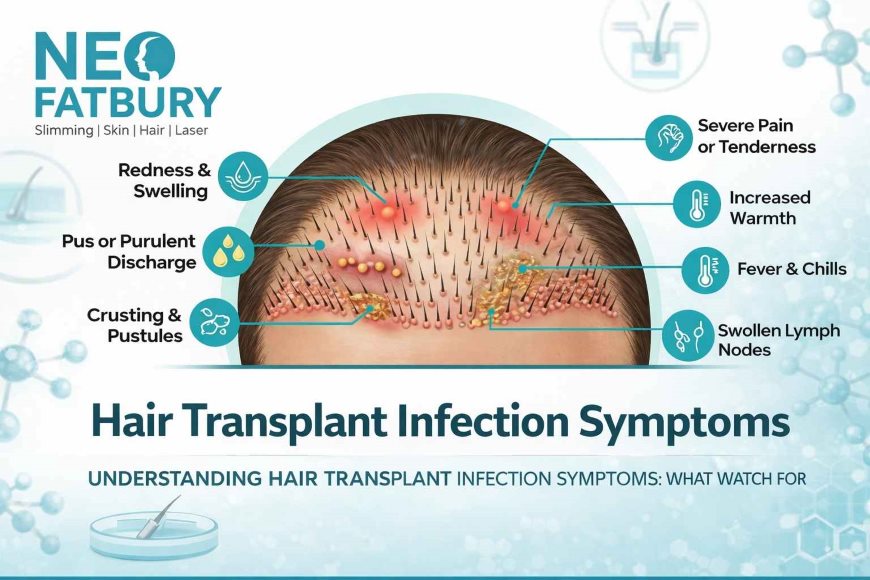
Early infection signals to watch for:
Redness that is spreading rather than staying localised
Warmth that feels hot to the touch rather than mildly warm
Swelling that is worsening after Day 2 rather than improving
Thick yellow or green discharge – not clear fluid
Fever above 38°C alongside scalp discomfort
Follow your clinic’s prescribed antibiotic and washing schedule strictly. Do not touch the scalp with unwashed hands. Avoid sweating completely during this window. If you notice spreading redness or fever, contact your surgeon the same day – do not wait.
Days 4 to 7 – The Scabbing Phase and What It Reveals
By Day 4, scabs begin forming firmly over each graft site. This is your scalp’s natural protective response and is a positive sign of early healing. However, this is also the phase where patients make the most aftercare mistakes – and where early infections begin to show more clearly.
What is completely normal during Days 4–7:
Firm, dark scabs over graft sites – do not pick these under any circumstance
Continued mild redness that is slowly fading
Itching across the recipient area – a sign of healing nerve activity
Some hair shedding from transplanted follicles – this is expected and temporary
Donor area beginning to look less raw and more settled
Infection signals to watch for:
Scabs that are oozing pus rather than drying naturally
A foul or unusual odour from the scalp
Scabs that are growing larger or merging into raised, inflamed patches
Pain that is increasing rather than gradually decreasing
Red streaks extending beyond the transplant area
Continue gentle washing as instructed. Resist the urge to scratch or pick – removing scabs prematurely pulls grafts and opens infection pathways. If scabs are oozing or smell unusual, photograph the area and send it to your clinic immediately rather than waiting for your scheduled follow-up.
Week 2 – The Shedding Phase and Hidden Infection Risks
Week 2 is emotionally the hardest part of recovery for most patients.
Transplanted hair begins to shed – sometimes rapidly – and patients often panic thinking something has gone wrong. This shedding is called telogen effluvium and is a completely normal part of the hair growth cycle resetting itself.
What is completely normal during Week 2:
Significant shedding of transplanted hair – up to 90% of grafts may shed
Scabs naturally loosening and falling away during washing
Scalp looking thinner than before surgery – this is temporary
Mild pinkness in the recipient area gradually fading
Donor area looking almost fully recovered externally
Infection signals to watch for:
Folliculitis – small pimple-like bumps appearing around graft sites
Persistent redness that has not faded at all since surgery
Swelling returning after it had previously subsided
Deep tenderness when pressing on specific areas of the scalp
Continued fever or flu-like symptoms beyond Day 10
What to do: Folliculitis in Week 2 is one of the most commonly missed infection signs because patients assume it is part of shedding. It is not. Small pustules around follicles need to be assessed by your surgeon promptly. Most cases respond quickly to a short antibiotic course if caught early.
Weeks 3 and 4 – When Most Infections Become Visible
By Week 3, the dramatic early recovery phase is mostly over. The scalp should be largely calm, scab-free, and beginning its internal healing work. New follicle activity is happening beneath the surface even though nothing is visible yet above it.
What is completely normal during Weeks 3–4:
Scalp appearing smooth and mostly scar-free
Donor area fully recovered with no visible marks
No pain, tenderness, or active redness
Occasional mild itching as follicles begin internal growth activity
Skin tone in recipient area returning to normal
Infection signals to watch for:
Cyst formation – fluid-filled bumps beneath the scalp surface
Ingrown hairs causing localised inflammation
Raised, thickened scar tissue forming in the donor area
Any return of redness, warmth, or tenderness after weeks of calm
Persistent patches where no scabbing occurred and skin looks unusually shiny
Weeks 3 and 4 infections are less common but more serious when they occur – because they are deeper and less visible. If you notice any of the above, do not self-medicate with over-the-counter creams. Get a physical assessment from your surgeon so the correct treatment can be prescribed
Conclusion:
Recovery from a
hair transplant is a journey that unfolds differently for every patient. But one thing remains constant – the earlier you catch a problem, the easier it is to fix. Use this week-by-week tracker as your personal reference guide throughout your recovery, and never hesitate to contact your clinic when something does not look or feel right.
Ready to learn more or book a consultation with a trusted hair restoration expert?
Contact us at neofatbury.in today and take the next step toward safe, lasting results.
Contact us – take the next step with confidence
FAQ’s
How do I know if my scalp is infected or just healing normally?
▼
Normal healing involves localised redness, mild swelling, and dry scabbing that gradually improves each day. Hair transplant infection symptoms include spreading redness, pus, foul odour, or fever – these require immediate medical attention.
Can I treat a hair transplant infection at home?
▼
No. Always contact your surgeon for a proper assessment and prescription. Self-treating with over-the-counter products can worsen the infection or damage healing grafts.
How common are infections after hair transplant surgery?
▼
Infections are rare when the procedure is performed in a sterile environment and aftercare is followed correctly. The risk is significantly higher at clinics with poor sterilisation standards or when patients skip their antibiotic course.
Will an infection ruin my hair transplant results permanently?
▼
Not always – if caught early, most infections are treated without long-term impact on results. Delayed treatment increases the risk of graft loss and scarring, which may require corrective procedures.
When should I go to the hospital instead of calling my clinic?
▼
If you experience a high fever above 39°C, severe pain, or rapidly spreading redness across your scalp within the first week, go to a hospital immediately. Hair transplant infection symptoms that escalate this quickly need urgent medical care.
Key Topics:
Hair Transplant Recovery Timeline
Hair Transplant Infection Symptoms by Day
Weekly Hair Transplant Healing Stages
Early Signs of Hair Transplant Infection
Normal vs Abnormal Healing After Hair Transplant
Post Hair Transplant Care Guide
Hair Transplant Scab Formation & Healing
Redness, Swelling & Pain After Transplant
Hair Transplant Aftercare Instructions
Hair Graft Healing Process







 Make An

 +91 7730049777
  neofatbury@gmail.com