
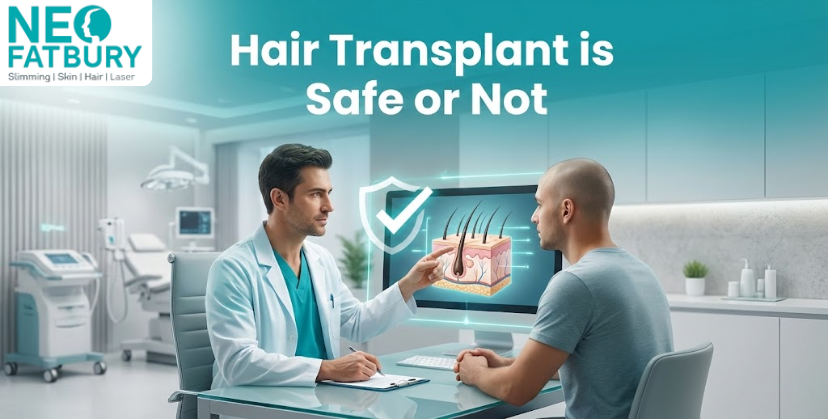
Hair loss has become one of the most common cosmetic and medical concerns among men and women today. With increasing stress levels, hormonal imbalances, genetics, and lifestyle changes, many people struggle to maintain healthy hair growth. As a result, hair restoration solutions have gained massive popularity, and among them, hair transplantation stands out as a permanent solution. However, one question continues to dominate the minds of people considering this procedure: Hair Transplant Is Safe or Not?
At Neo Fatbury, we believe in transparent education and ethical medical practices. This detailed guide is designed to answer every concern you may have regarding the safety, effectiveness, risks, and long-term outcomes of hair transplant procedures, helping you make an informed decision with confidence.
Understanding Hair Transplantation And How It Works
A hair transplant is a medically approved cosmetic procedure where healthy hair follicles are extracted from a donor area-usually the back or sides of the scalp-and implanted into areas experiencing thinning or baldness. The transplanted hair follicles are genetically resistant to hair fall, making the results permanent when performed correctly.
When people ask Hair Transplant Is Safe or Not?, the answer largely depends on factors such as the technique used, surgeon expertise, clinic hygiene standards, and post-procedure care. With advancements in medical technology, modern hair transplant techniques like FUE and FUT are minimally invasive and highly safe.
At Neo Fatbury, all procedures are performed under strict medical supervision using globally approved protocols, ensuring maximum patient safety and natural-looking outcomes.
Is Hair Transplant A Safe Procedure Medically?
From a medical standpoint, hair transplantation is considered a Low-Risk And Safe Procedure when performed by trained professionals. It is not a life-threatening surgery and does not involve major organs or deep tissue penetration. The procedure is typically done under local anesthesia, meaning the patient remains conscious and experiences minimal discomfort.
Many patients worry about serious complications and ask questions like Does Hair Transplant Cause Cancer or Does Hair Transplant Affect The Brain. The simple and medically proven answer is No. Hair transplant procedures only involve the superficial layers of the scalp and have no connection to cancer, brain function, or neurological damage.
Posibble Side Effects: Are They Dangerous?
While hair transplantation is safe, like any minor surgical procedure, it may come with temporary side effects. These effects are generally mild and subside within a few days to weeks when proper care is taken.
Common temporary effects may include slight swelling, redness, itching, or scabbing in the treated areas. Some patients may experience temporary shock loss, where existing hair sheds before regrowth begins. This is a natural process and not a cause for concern.
Many people panic and ask Is Hair Transplant Painful Or Risky. In reality, pain levels are minimal, and risks are extremely low when the procedure is done in a certified clinic like Neo Fatbury. Severe complications such as infection or scarring are rare and usually occur only when procedures are done at unlicensed or low-standard facilities.
Who Can Safely Undergo A Hair Transplant?
Another important aspect of answering Hair Transplant is Safe Or Not depends on patient suitability. Hair transplantation is safe for both men and women who meet certain medical criteria. Ideal candidates usually have stable hair loss patterns, good donor hair density, and overall good health.
Patients with uncontrolled diabetes, severe heart conditions, or certain autoimmune disorders may require additional medical evaluation before proceeding. This is why a professional consultation is essential before planning the procedure.
At Neo Fatbury, every patient undergoes a thorough scalp analysis and medical assessment to ensure the procedure is not only effective but also 100% Safe And Customized.
Long-Term Safety And Permanen Results
One of the biggest advantages of hair transplantation is its long-term safety and permanence. The transplanted hair follicles are resistant to hair loss hormones, meaning they continue to grow naturally for a lifetime.
Many people worry about questions like Can Transplanted Hair Fall Again or Is Hair Transplant Safe in The Long Run. The truth is that transplanted hair is permanent, and once the follicles settle into the scalp, they behave like natural hair.
Why Clinic And Doctor Experience Matter For Safety
The safety of a hair transplant is directly related to who performs the procedure and where it is done. Clinics that follow international hygiene standards, use advanced tools, and employ experienced surgeons significantly reduce risks.
At Neo Fatbury, we follow strict sterilization protocols, advanced implantation techniques, and personalized treatment planning. Our focus is not just on aesthetics but on Patient Safety, Natural Results, And Long-Term Satisfaction.
Choosing a low-cost or unqualified provider can increase the risk of infection, unnatural hairlines, and poor graft survival. Safety should always be prioritized over price.
Contact Us – Take The First Step Towards Safe Hair Restoration




 Make An

 +91 7730049777
  neofatbury@gmail.com