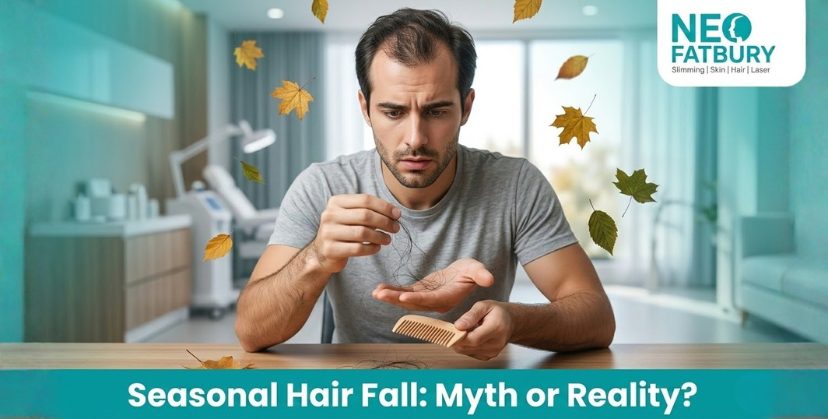
Hair loss is a concern that affects millions of people across the world. Many individuals notice that their hair shedding increases during certain times of the year and begin to wonder whether this is normal. This raises a common question: Seasonal Hair Fall:Myth Or Reality? The answer is more complex than a simple yes or no. Seasonal hair fall does exist to some extent, but it is often misunderstood.
Hair growth occurs in cycles, and external factors such as climate, sunlight exposure, humidity, and lifestyle changes can influence this cycle. During specific seasons, the hair shedding phase may become more noticeable. However, not all hair loss during these periods is considered normal. In some cases, seasonal shedding can be mistaken for more serious hair loss conditions.
Understanding the science behind Seasonal Hair Fall:Myth Or Reality? helps people take better care of their hair and prevent unnecessary panic. At Neo Fatbury, we frequently meet individuals who worry about sudden hair shedding, especially during seasonal transitions. Through proper diagnosis and treatment, many of these concerns can be effectively addressed.
Understanding The Hair Growth Cycle
To understand Seasonal Hair Fall:Myth Or Reality?, it is important to first know how the hair growth cycle works. Hair grows in three main phases known as Anagen, Catagen, and Telogen.
The Anagen phase is the active growth stage where hair follicles produce new hair. This phase can last several years depending on genetics and overall health. The Catagen phase is a short transitional stage where hair growth slows down and follicles begin to shrink. Finally, the Telogen phase is the resting stage where hair eventually sheds and makes way for new hair growth.
Normally, a person can lose between 50 and 100 strands of hair per day as part of this natural cycle. However, certain environmental changes may push more hair follicles into the Telogen phase simultaneously, leading to noticeable shedding.
This phenomenon is often referred to as seasonal hair shedding, which is why many people question Seasonal Hair Fall:Myth Or Reality?
For individuals experiencing excessive hair loss beyond normal shedding, professional evaluation may be necessary. You can explore more about advanced solutions by visiting our internal page on Hair Restoration Treatments At Neo Fatbury.
Why Does Seasonal Hair Fall Happen?
Several factors contribute to seasonal hair fall, and they can vary depending on geographic location, climate conditions, and personal health. In countries like India, changes in temperature, humidity, and sunlight can affect the scalp and hair follicles.
During monsoon or autumn seasons, many people report increased hair shedding. One theory suggests that hair follicles enter the resting phase more frequently after summer due to reduced sun exposure. Another possible explanation is hormonal fluctuation triggered by environmental changes.
Additionally, lifestyle habits such as diet changes, dehydration, and increased scalp infections during humid seasons can worsen hair fall. Pollution and sweat accumulation on the scalp may also weaken hair roots.
Although mild shedding during seasonal transitions can be normal, excessive hair loss should not be ignored. If hair fall persists for several months, it may indicate underlying issues such as nutritional deficiency, hormonal imbalance, or scalp disorders.
At Neo Fatbury, our specialists carefully examine whether a patient is experiencing true seasonal shedding or a medical hair loss condition that requires treatment.
For more insights on treatment options, you can read our blog on
Best Hair Transplantation in Hyderabad, where we discuss modern hair restoration techniques.
Myths Vs Facts About Seasonal Hair Fall
The topic Seasonal Hair Fall:Myth Or Reality? is surrounded by several myths. These misconceptions often create confusion and unnecessary anxiety among individuals experiencing temporary hair shedding.
One common myth is that seasonal hair fall always leads to permanent hair loss. In reality, seasonal shedding is usually temporary and hair growth resumes naturally once the hair cycle stabilizes.
Another misconception is that washing hair frequently increases hair fall during seasonal changes. In truth, washing only removes hair that has already entered the shedding phase. Proper scalp hygiene is essential to maintain healthy hair follicles.
Many people also believe that seasonal hair fall only occurs during one specific season, such as monsoon. However, research suggests that hair shedding patterns can vary depending on climate and individual body responses.
Understanding the difference between normal seasonal shedding and serious hair loss is crucial. If you notice thinning hair, widening part lines, or visible scalp patches, professional evaluation becomes necessary.
You can also read our detailed guide on
Is Hair Transplant Painful to understand how modern treatments help restore hair effectively.
When Should You Worry About Hair Fall?
Although mild shedding during seasonal transitions can be normal, certain warning signs indicate that the hair loss may not be seasonal. If you notice excessive hair strands on your pillow, comb, or shower drain for an extended period, it may require medical attention.
Other warning signs include sudden hair thinning, patchy hair loss, scalp irritation, or hair breakage. These symptoms may be linked to conditions such as androgenetic alopecia, telogen effluvium, scalp infections, or nutritional deficiencies.
Seeking professional advice early can prevent further hair damage and help restore hair health effectively. Specialists at Neo Fatbury provide advanced diagnostic techniques to identify the root cause of hair loss and recommend suitable treatments.
How to Reduce Seasonal Hair Fall Naturally
While seasonal hair shedding may not always be preventable, adopting proper hair care habits can significantly reduce its impact. Maintaining a balanced diet rich in vitamins, proteins, and minerals supports healthy hair growth.
Hydration is equally important because dehydration can weaken hair roots and increase hair breakage. Gentle hair care practices such as avoiding excessive heat styling, harsh chemical treatments, and tight hairstyles also protect the hair shaft.
Scalp hygiene plays a vital role as well. Regular cleansing removes sweat, dirt, and oil buildup that may block hair follicles. Using mild shampoos and nourishing conditioners helps maintain scalp balance.
Stress management is another crucial factor. Chronic stress can disrupt the hair growth cycle and accelerate hair shedding. Relaxation techniques, proper sleep, and regular exercise help maintain hormonal balance and overall hair health.
Treatment Options For Severe Hair Loss
If hair fall becomes persistent or severe, medical treatments may be necessary. Dermatologists and hair specialists can diagnose the underlying cause and recommend personalized treatment plans.
Treatment options may include medications, platelet-rich plasma therapy, nutritional supplements, and advanced hair restoration procedures. In cases of permanent hair loss, hair transplantation can provide long-term results.
At
Neo Fatbury, we specialize in modern hair restoration techniques designed to deliver natural-looking results. Our expert team focuses on patient safety, advanced technology, and customized treatment plans.
Early diagnosis and treatment significantly improve the chances of restoring healthy hair growth.
Conclusion:
So, Seasonal Hair Fall:Myth Or Reality? The answer is that seasonal hair fall is indeed real to a certain extent. However, it is usually temporary and part of the natural hair cycle. Environmental factors, lifestyle habits, and seasonal transitions may increase hair shedding for a short period.
That said, persistent or excessive hair loss should never be ignored. Identifying the root cause early helps prevent long-term hair damage and allows for effective treatment.
If you are experiencing unusual hair fall and want expert guidance, the specialists at Neo Fatbury are here to help. Our experienced team provides advanced diagnosis and customized hair restoration solutions designed to restore both hair and confidence.
Contact Us– Neo Fatbury Today and Take The First Step Toward Confident, Healthy Hair.
FAQ’s
Is Seasonal Hair Fall Real?
▼
Yes, Seasonal Hair Fall: Myth Or Reality is real and many people notice temporary hair shedding during seasonal changes.
Which Season Causes More Hair Fall?
▼
According to Seasonal Hair Fall: Myth Or Reality, hair fall is commonly noticed during monsoon and autumn.
How Long Does Seasonal Hair Fall Last?
▼
In Seasonal Hair Fall: Myth Or Reality, shedding usually lasts around 4–6 weeks before normal hair growth resumes.
Can Seasonal Hair Fall Be Controlled?
▼
Yes, Seasonal Hair Fall: Myth Or Reality can be controlled with good diet, scalp care, and healthy hair habits.
When Should I See a Hair Specialist?
▼
If Seasonal Hair Fall: Myth Or Reality continues for more than two months, consult experts like Neo Fatbury.
Key Topics:
Seasonal Hair Fall Myth Or Reality
Causes Of Seasonal Hair Fall
Seasonal Changes Affect Hair Growth
Hair Growth Cycle And Hair Loss
How To Reduce Seasonal Hair Fall
Best Diet For Healthy Hair
Scalp Care During Seasonal Hair Fall
Symptoms Of Excessive Hair Loss
Best Treatments For Hair Fall
Expert Hair Care By Neo Fatbury











 Make An

 +91 7730049777
  neofatbury@gmail.com