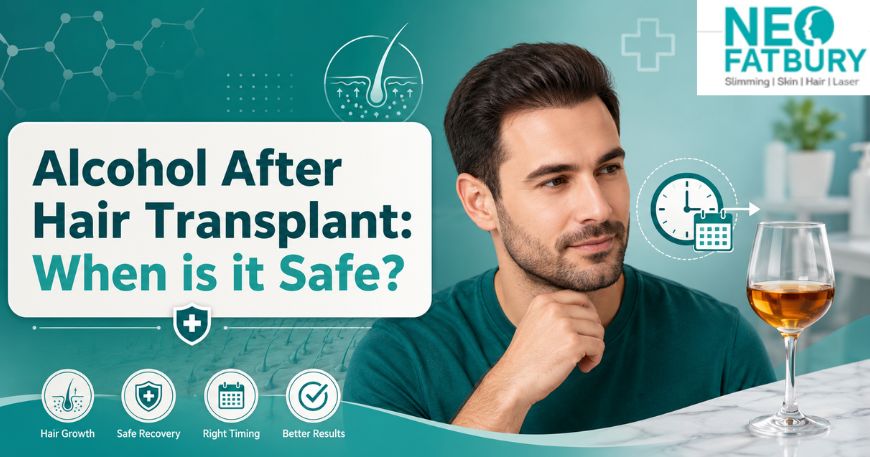
One of the most common questions patients ask after surgery is about alcohol after hair transplant and when it is safe to resume drinking. A hair transplant is a significant step toward restoring your hair and confidence. Whether you have undergone an
FUE or FUT procedure, proper aftercare is essential for achieving the best possible results.
While enjoying an occasional drink may seem harmless, alcohol can affect your body’s healing process during the critical recovery period. Understanding the relationship between alcohol and hair transplant recovery can help protect your newly implanted grafts and ensure optimal hair growth. At Neo Fatbury, we educate every patient about the dos and don’ts of post-transplant care to maximise treatment success. This guide explains everything you need to know about consuming alcohol after a hair transplant, potential risks, recommended waiting periods, and expert recovery tips.
Why Alcohol Should Be Avoided After a Hair Transplant
The first few days after a hair transplant are crucial for graft survival and scalp healing. During this period, your body works to establish blood circulation around the transplanted follicles and repair the treated areas.
Consuming alcohol too soon after a hair transplant can interfere with these processes. Alcohol acts as a blood thinner and can increase bleeding, swelling, and inflammation around the scalp. It may also affect your body’s ability to heal efficiently, potentially impacting the success of the transplant.
Additionally, alcohol can cause dehydration, which is not ideal during recovery. Proper hydration plays an important role in tissue repair and healthy hair growth.
How Alcohol Affects Hair Transplant Recovery
Increased Risk of Bleeding
One of the primary concerns regarding alcohol after a hair transplant is its effect on blood circulation. Alcohol can thin the blood, making it easier for bleeding to occur. Excessive bleeding may affect the stability of newly implanted grafts and delay the healing process.
Increased Swelling
Swelling is a common side effect following a hair transplant procedure. Drinking alcohol shortly after surgery may increase fluid retention and worsen swelling around the forehead and scalp. This can prolong discomfort and recovery time.
Delayed Healing
The body’s healing mechanisms work best when supported by proper nutrition, hydration, and rest. Consuming alcohol after a hair transplant may slow tissue repair and reduce the body’s ability to recover effectively.
Dehydration
Alcohol is known to cause dehydration by increasing fluid loss from the body. Since hydration is essential for healthy skin and tissue repair, drinking alcohol during the recovery period can negatively impact healing.
When Is It Safe to Drink Alcohol After a Hair Transplant?
Most
Hair Transplant Specialists recommend avoiding alcohol after a hair transplant for at least 7 to 10 days following the procedure. Some surgeons may advise waiting up to two weeks, depending on the patient’s health condition and recovery progress.
The first week is particularly important because the grafts are still becoming securely attached to the scalp. During this period, minimising anything that may interfere with healing is strongly recommended.
At Neo Fatbury, our specialists provide personalised aftercare plans that include guidance on alcohol consumption based on each patient’s individual recovery process.
Can Alcohol Affect Hair Growth After a Hair Transplant?
While moderate alcohol consumption is unlikely to directly cause hair transplant failure, excessive drinking can affect overall hair health. Long-term alcohol consumption may contribute to nutritional deficiencies, dehydration, and poor circulation, all of which can negatively impact hair growth.
Patients who prioritize healthy habits during recovery often experience better healing and stronger hair growth outcomes. Avoiding alcohol after a hair transplant during the recommended recovery period can support healthier follicle development and improve the chances of successful results.
Important Aftercare Tips Following a Hair Transplant
Stay Hydrated
Drinking plenty of water helps maintain proper hydration and supports tissue repair. Hydration is particularly important during the first few weeks after surgery.
Follow Medication Instructions
Patients are often prescribed medications to reduce swelling, prevent infection, and support recovery. If you’re wondering
Alcohol After Hair Transplant: When is it Safe?, avoid consuming alcohol while taking medications unless approved by your doctor.
Avoid Smoking
Like alcohol, smoking can interfere with blood circulation and slow healing. Patients are generally advised to avoid smoking before and after their hair transplant procedure.
Protect the Scalp
Avoid direct sunlight, excessive sweating, and activities that may cause trauma to the scalp during the early recovery period.
Maintain a Healthy Diet
A balanced diet rich in protein, vitamins, and minerals can help support healthy hair growth and recovery after a transplant.
Why Choose Neo Fatbury for Hair Transplant Treatment?
Choosing the right clinic is essential for achieving successful and natural-looking results. At Neo Fatbury, our experienced specialists focus on every aspect of the patient journey, from consultation and treatment to aftercare and long-term support.
We provide detailed guidance on topics such as alcohol after hair transplant, recovery timelines, scalp care, and hair growth expectations. Our commitment to patient satisfaction and advanced treatment techniques has made Neo Fatbury a trusted destination for hair restoration and aesthetic services.
Conclusion
Understanding the impact of alcohol after a hair transplant is an important part of ensuring a smooth recovery and achieving optimal results. Avoiding alcohol during the recommended healing period can support graft survival, reduce complications, and promote healthy hair growth.
Contact Neo Fatbury today to schedule your consultation and take the next step toward healthier, fuller, and more confident hair.
FAQs
1. When can I drink alcohol after a hair transplant?
▼
Most specialists recommend avoiding alcohol after a hair transplant: When is it Safe? concerns by waiting at least 7–10 days before consuming alcohol.
2. Why should I avoid alcohol after a hair transplant?
▼
Understanding Alcohol After Hair Transplant: When is it Safe? is important because alcohol can increase bleeding, swelling, and dehydration during recovery.
3. Can alcohol affect hair transplant results?
▼
Yes, Alcohol After Hair Transplant: When is it Safe? is a common question since excessive alcohol consumption may slow healing and impact graft survival.
4. Is it safe to drink alcohol within 24 hours of surgery?
▼
No, regarding Alcohol After Hair Transplant: When is it Safe?, alcohol should be avoided during the first 24–48 hours after the procedure.
5. How does alcohol affect recovery after a hair transplant?
▼
When considering alcohol after a hair transplant: When is it Safe?, remember that alcohol can reduce hydration levels and delay the body’s natural healing process.
Key Topics:
Drinking alcohol after hair transplant
Hair transplant aftercare
Hair transplant recovery
Hair transplant healing process
Hair transplant recovery tips
Hair transplant post-operative care
Hair transplant recovery guide
Hair transplant care instructions
Hair transplant recovery timeline
Hair transplant graft healing








 Make An

 +91 7730049777
  neofatbury@gmail.com