What Are the Best Hair Regrowth Options for Hair Loss in Hyderabad?
Nov 26, 2026
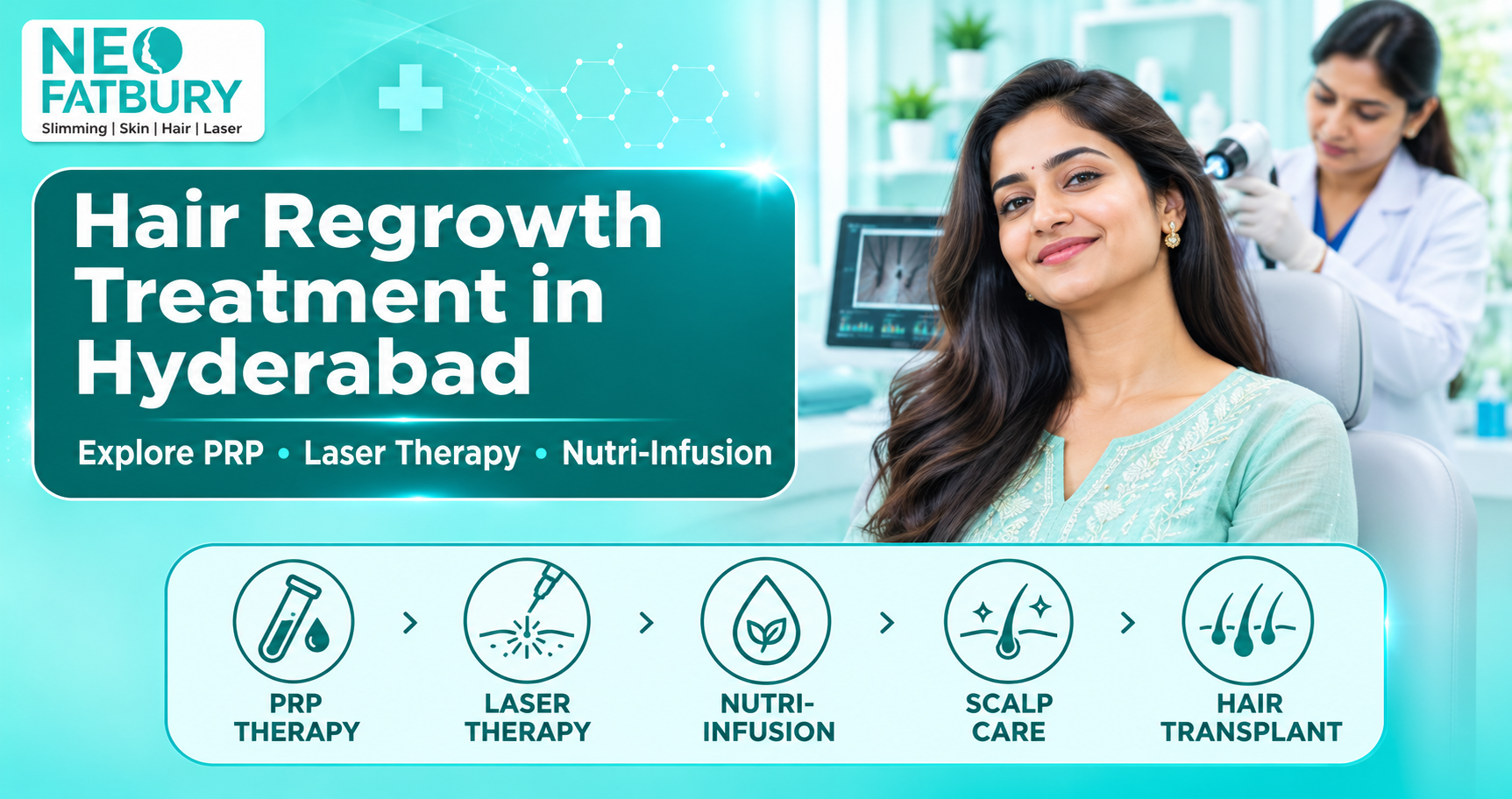
Hair loss can be difficult to manage and can even affect self-confidence. Concerns may arise from a retreating hairline, an expanding hair part or even from hair falling out in the shower. To successfully treat hair loss, it is important to firstly understand what is causing it.Hair regrowth can be treated in a variety of ways depending on the reason for and severity of hair loss. This may include drug treatment, low level laser therapy, nutritional treatment, scalp treatments and hair transplants. A dermatologist can advise on the most suitable treatment for an individual.
What Causes Hair Loss?
Hair has a natural life cycle comprising of growing, transitional and resting stages. It is common to lose between 50-100 strands of hair on a daily basis. Nevertheless, if you are continually losing hair, or observe thinning or patches of bare skin on your scalp, there may be an issue to investigate.Reasons for hair loss may include:
– Genetics – both men and women can suffer from genetically-related hair loss (androgenetic alopecia).
– Hormonal issues – for example, those suffering from PCOS or thyroid related issues can sometimes experience hair loss.
– Poor nutrition – insufficient iron, protein and/or particular vitamins can impact upon hair.
– Stress – physical stress, surgery, infection and/or major changes in body weight can all cause hair to be lost.
– Poor scalp health – for example, sufferers can experience issues including dandruff, scalp inflammation and infections.
– Unhealthy lifestyle choices – for instance, diets and high heat and/or tight hairstyles can negatively affect hair.
Understanding the cause of hair loss will allow an individual to decide on the most suitable treatment.
What are the Best Hair Regrowth Treatments?
As mentioned above, different types of hair loss may require different treatment methods. This will depend on both the diagnosis and the severity of follicle damage.
1. Drug Treatment
Drug treatment is frequently suggested for those with hereditary related hair loss.Minoxidil is a drug that is often used and can encourage hair growth and reduce hair thinning. It may be suggested for both men and women for the treatment of pattern hair loss. As with many drugs, it is typically necessary to continue treatment for several months to see positive effects. It must then be continued to sustain these effects.Doctors may also prescribe drugs such as finasteride for men who suffer from androgenetic alopecia. Again, this should only be done under professional guidance as these can have side effects and will not be suitable for all individuals.Generally, drug treatment is more effective where hair follicles are still healthy and able to generate hair.
2. Low Level Laser Therapy
Low level laser therapy (LLLT)uses particular light wavelengths to activate cells.It can be used to potentially enhance the density of hair in some people and is another non-invasive treatment that may be used for hereditary hair loss. Usually, a series of treatment sessions are undertaken over a number of months.Whilst low level laser therapy can be a good complementary treatment, it is not guaranteed to be as effective as medically proven methods.
3. Intensive Hair Follicle Treatment
Intensive hair follicle treatment is a non-invasive treatment. Using micro-injections, specific substances are introduced to a person’s scalp.This is aimed at improving scalp and follicle health. Some clinics offer this as part of a hair restoration service.There may be differences in the substances used, together with the method of treatment and the supporting clinical information. Therefore, it is advisable to find out what substance is being used, its likely benefits and any potential adverse effects.
4. Nutri-Infusion Treatment
Good nutrition is key for good hair health. Nutri-infusion treatment sees targeted nutrients being introduced to the scalp.Neo Fatburyprovides nutri-infusion as one of its non-invasive hair regrowth services.It may be used as a complementary treatment for those whose hair is fragile or prone to breaking. However, it should not be used in place of investigating and rectifying any identified nutritional inadequacies under the guidance of suitable medical professionals.Good quality nutrition, including enough protein, iron and essential nutrients, continues to be fundamental for good hair health.
5. PRP Treatment
Platelet rich plasma (PRP) is a highly concentrated part of an individual’s blood.A small amount of blood is taken and then analysed to isolate the platelet rich plasma, which is then injected into targeted sections of a person’s scalp. Platelets have growth factors that may aid healing and encourage hair follicle function.PRP treatment is frequently investigated as a treatment for early stage pattern hair loss. Again, a series of treatment sessions may be advised and follow-up may then be required, depending on how an individual responds. Clinical research demonstrates encouraging outcomes for this treatment. However, as with other treatments, there can be differing methodologies and responses. It is therefore important to speak to a suitable professional about the supporting clinical information, appropriateness and costs associated with this treatment.
6. Hair Transplantation
When hair follicles are irreversibly damaged and/or extensive bald patches exist, non-invasive hair restoration treatments may not be sufficiently effective.Hair can be transplanted by taking healthy hair follicles from one section of a person’s scalp (usually the back or sides) and implanting them in areas where hair is lacking.Two widely referenced hair transplant methods are:
– FUE (Follicular Unit Extraction) – follicular units are extracted and then transplanted.
– FUT (Follicular Unit Transplantation) – a strip of scalp is excised from the donor site. Follicular units are then isolated and transplanted.
Hair can be successfully transplanted for suitable individuals. However, as with other treatments, it does not halt hair loss in areas of the scalp where transplantation has not been undertaken. Consequently, ongoing medical treatment may still be required.
How to Decide on Appropriate Hair Regrowth Treatment
Various aspects should be analysed when deciding on a hair restoration treatment. These include:
Diagnosis – a dermatologist should assess a person’s scalp and hair loss.
Follicle health – healthy and irreversibly damaged follicles can react in different ways.
Treatment support – ensure that the treatment being suggested is backed up by adequate clinical information for your condition.
Treatment programme – ascertain how many treatment sessions will be required, what aftercare is necessary and how long the recovery period will last.
Cost – compare the total cost of a treatment regime rather than simply the initial cost.
Blood tests may also be advised to investigate potential nutritional, thyroid and/or hormonal issues.
When Should You Attend a Hair Restoration Clinic?
It may be appropriate to attend a clinic if you:
Continually or increasingly lose hair.
Observe thinning hair at the crown and/or hairline.
Have an expanding hair part.
Experience sudden hair loss.
Suffer from an itchy, flaky or inflamed scalp.
Lose hair as a result of sickness, medication and/or hormonal changes.
If you suddenly lose hair, experience a painful inflamed scalp or notice rapid onset baldness, it is advisable to consult a medical professional promptly.
Selecting Appropriate Hair Regrowth Treatment
In deciding on a Hair Restoration Clinic, in addition to analysing the treatment provision, it is important to ensure that the clinic can competently analyse a person’s scalp. Furthermore, there should be suitable medical oversight and information should be provided regarding the various treatments on offer. Appropriate expectations about treatment outcomes should also be established.Neo Fatbury provides a range of hair related services in Hyderabad. In addition to non-invasive hair regrowth and anti hair loss treatments, it also provides low level laser, nutri-infusion and hair transplant services. Appropriate services for an individual should be analysed with the medical professionals at the clinic.Information on Neo Fatbury’s hair regrowth and hair loss treatments is available to view.Good hair restoration is not an instant process. Appropriate treatment will depend on the underlying issue, follicle health and the level of aftercare. Ideally, an early diagnosis should be obtained and an individualised treatment programme discussed.If you are seeking expert hair regrowth treatment in Hyderabad, contact Neo Fatbury to arrange a consultation and to explore appropriate treatment options for your hair and scalp.
FAQs
1. What is the best hair regrowth treatment in Hyderabad?
The best treatment depends on the cause and severity of hair loss. Options include minoxidil, PRP therapy, low-level laser therapy and hair transplantation. A dermatologist can assess your scalp and recommend an appropriate treatment based on follicle health and individual requirements.
2. Can lost hair grow back naturally?
Yes, some types of hair loss are temporary and hair can regrow once the underlying cause is addressed. Hair shedding associated with stress, illness or nutritional deficiencies may improve. However, hereditary hair loss often requires ongoing treatment to maintain hair density.
3. Is PRP hair treatment effective for hair loss?
PRP may improve hair density in certain people with pattern hair loss. It uses platelet-rich plasma obtained from the patient’s blood and injected into the scalp. Results vary, and multiple sessions may be required. A medical consultation helps determine whether PRP is suitable.
4. How long does hair regrowth treatment take to show results?
Hair regrowth is gradual. Some people notice reduced shedding or early improvements within three to six months, while more visible changes may take six to twelve months. The timeline depends on the treatment, underlying condition and consistency of care.
5. When should I consider a hair transplant?
A hair transplant may be considered when hair loss is established, suitable donor follicles are available and non-surgical treatments cannot provide the desired coverage. A specialist should assess the donor area, hair loss pattern, age and long-term expectations before recommending surgery.






 Make An

 +91 7730049777
 neofatbury@gmail.com