Hair loss is a common concern affecting both men and women, often impacting confidence and self-image. As a result, many people seek long-term solutions that deliver natural-looking results. One of the most effective options available today is hair transplantation. At
Neo Fatbury, patients frequently ask, What is Hair Transplantation and How Does it Work? Understanding the procedure, its benefits, and the science behind it can help individuals make informed decisions about restoring their hair and confidence.
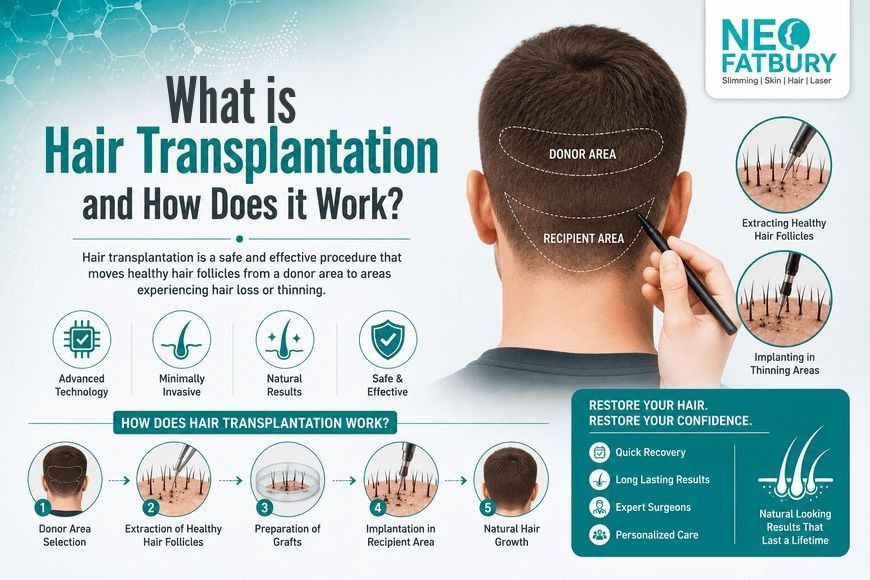
Hair transplantation is a minimally invasive procedure that transfers healthy hair follicles from one part of the scalp to areas experiencing thinning or baldness. Thanks to advancements in technology and techniques, modern hair transplants provide permanent, natural-looking results with minimal downtime.
What is Hair Transplantation?
Hair transplantation is a cosmetic hair restoration procedure designed to treat hair loss by relocating healthy hair follicles from a donor area to a recipient area.
The donor area is typically located at the back or sides of the scalp because these follicles are genetically resistant to hair loss. Once transplanted, the follicles continue to grow naturally in their new location, providing long-lasting results.
Hair transplantation is commonly used to treat:
Male pattern baldness
Female pattern hair loss
Receding hairlines
Thinning crowns
Hair loss caused by injuries or scars
Unlike temporary solutions such as medications, wigs, or hair fibers, a hair transplant offers a permanent solution using the patient’s own natural hair.
How Does Hair Transplantation Work?
Understanding the process helps answer the question, What is Hair Transplantation and How Does it Work?
The procedure involves several carefully planned steps.
Step 1: Consultation and Hair Analysis
The process begins with a detailed consultation. During this stage, the surgeon evaluates:
Hair loss pattern
Donor hair density
Scalp condition
Medical history
Expected results
A customized treatment plan is then created based on the patient’s goals and hair restoration needs.
Step 2: Donor Hair Extraction
Healthy hair follicles are extracted from the donor area using advanced techniques such as Follicular Unit Extraction (FUE).
The follicles are collected individually, helping minimize scarring and ensuring a natural appearance after healing.
Step 3: Graft Preparation
Each extracted follicle is carefully examined and preserved under controlled conditions. This step is crucial because healthy grafts contribute significantly to successful hair growth.
Step 4: Implantation
The prepared follicles are implanted into the thinning or bald areas following the natural direction and angle of existing hair growth.
This artistic and technical process helps create a realistic hairline and natural-looking density.
Popular Hair Transplant Techniques
Modern hair restoration clinics use advanced methods that improve comfort and results.
Follicular Unit Extraction (FUE)
FUE is one of the most widely used hair transplant techniques.
Benefits include:
Minimal scarring
Faster recovery
Natural-looking outcomes
Less post-procedure discomfort
The technique involves extracting and implanting individual follicular units for precise placement.
Direct Hair Implantation (DHI)
DHI is an advanced variation of FUE that allows direct implantation of hair follicles using specialized tools.
Advantages include:
Higher precision
Improved graft survival rates
Natural hairline design
Reduced handling of grafts
Both methods are highly effective and can be tailored to the patient’s unique requirements.
What Happens After A Hair Transplant?
Recovery is generally straightforward and manageable.
First Few Days
Patients may experience:
Mild redness
Slight swelling
Temporary tenderness
Minor scabbing
These effects are normal and typically resolve within a few days.
First Few Weeks
The transplanted hair may temporarily shed. This phase, known as shock loss, is a normal part of the hair growth cycle.
Three To Six Months
New hair growth gradually becomes visible as the transplanted follicles enter the active growth phase.
Nine To Twelve Months
Most patients see significant improvements in hair density and overall appearance during this period.
Benefits of Hair Transplantation
Hair transplantation continues to grow in popularity because of its numerous benefits.
Natural-Looking Results
Since your own hair follicles are used, the results blend naturally with existing hair.
Permanent Solution
Unlike temporary treatments, transplanted follicles continue growing for years.
Low Maintenance
Once healing is complete, transplanted hair can be washed, styled, and maintained like natural hair.
Boosted Confidence
Many patients report improved self-esteem and greater confidence after achieving fuller hair coverage.
Who is A Good Candidate For Hair Transplantation?
Hair transplantation is ideal for individuals who:
Have stable hair loss
Possess sufficient donor hair
Are in good overall health
Have realistic expectations
A professional consultation helps determine whether the procedure is the right solution for a specific hair loss condition.
Why Choose Neo Fatbury For Hair Transplantation in Hyderabad?
Choosing the right clinic is essential for achieving successful results.
At Neo Fatbury, patients benefit from:
Advanced hair restoration technology
Experienced specialists
Personalized treatment plans
Modern FUE and DHI techniques
Comprehensive post-treatment support
The focus is always on delivering natural-looking results while prioritizing patient safety and comfort throughout the journey.
Conclusion
Understanding What is Hair Transplantation and How Does it Work? is the first step toward making an informed decision about hair restoration. By transferring healthy follicles from donor areas to thinning regions, hair transplantation provides a permanent, natural-looking solution for hair loss. With advanced techniques and expert care from Neo Fatbury, patients can restore not only their hair but also their confidence. Contact our team today to schedule a consultation and discover the best hair restoration solution for your needs.
FAQs
1. How Does The Process Restore Hair in Thinning Areas Safely?
▼
What is hair transplantation and how does it work? it involves moving healthy hair follicles to thinning areas to create natural-looking growth.
2. Who Can Benefit Most From Modern Hair Restoration Methods?
▼
What is hair transplantation and how does it work? It is suitable for many individuals experiencing hair loss who have sufficient donor hair.
3. How Long Does it Take To See Noticeable Hair Growth Results?
▼
What is hair transplantation and how does it work? New hair growth typically begins after a few months, with fuller results over time.
4. What Techniques Are Commonly Used For Hair Restoration Today?
▼
What is hair transplantation and how does it work? Popular methods include FUE and FUT, both designed to restore natural hair growth.
5. What Should Patients Expect During The Recovery Period After?
▼
What is hair transplantation and how does it work? Recovery usually involves mild discomfort, healing time, and gradual hair regrowth.
Key Topics:
Hair Graft Transplantation
Hair Follicle Transplant
Hair Restoration Surgery
Permanent Hair Loss Solution
Hair Transplant Recovery
Natural Hair Growth Treatment
Hair Transplant Consultation
Advanced Hair Restoration
Hair Regrowth Procedure
Scalp Hair Transplant Treatment







 Make An

 +91 7730049777
  neofatbury@gmail.com